
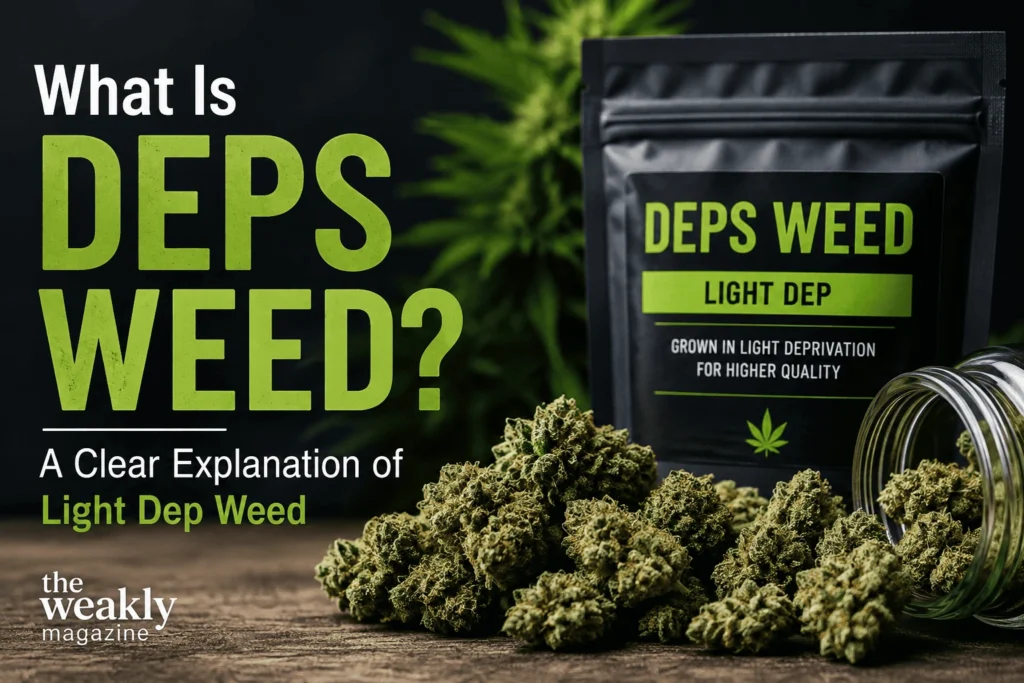
“Deps weed” usually refers to cannabis grown with a light-deprivation method, often called light deps weed. It is not the name of a specific strain or a separate type of cannabis. The term describes how the plant is grown, particularly how its exposure to light is managed.
The method is commonly associated with greenhouse cultivation. Plants still receive natural sunlight, but growers control periods of darkness to influence when flowering begins. The controlled darkness makes the growing method different from simply leaving a cannabis plant outdoors to follow the natural season.
It also differs from indoor growing, where artificial lighting and the growing environment can be controlled much more directly. The growing method alone does not tell you whether the finished flower will be weak or high quality.
What Does “Deps Weed” Actually Mean?
“Deps weed” is a shorthand way of referring to flowers produced through light-deprivation cultivation. The “dep” comes from deprivation, meaning the grower deliberately limits the plant’s exposure to light for a set period. The point is to influence the plant’s flowering schedule rather than wait entirely for the natural change in daylight.
That does not make light a cannabis strain. A strain can be grown using different cultivation methods, so the word “Deps weed” tells you more about the production method than the plant’s genetics.
Light-dep setups commonly use greenhouses where plants receive natural sunlight as their main source of light. The grower then manages darkness by covering or shading the greenhouse during part of the day. This controlled dark period can encourage flowering earlier than the plant would naturally begin under the seasonal outdoor light cycle.
Regular outdoor growing is more dependent on the natural progression of daylight and seasons. Fully indoor growing takes the opposite approach, with artificial lighting and environmental conditions under much tighter control. Light dep sits somewhere between those two in terms of how the growing environment is managed.
How Light Deprivation Changes the Growing Process
Cannabis plants respond to changes in daylight, and the shift toward shorter days is closely tied to the flowering stage in photoperiod varieties. Light deprivation works by giving the plant a controlled dark period rather than leaving that timing entirely to the natural seasonal cycle. That basic relationship is the key to understanding the deps weed meaning without treating “deps” as something about the plant itself.
In a greenhouse, the grower can manage when the plants receive light and when they are kept in darkness. The goal is to influence the plant’s flowering schedule, which can make the timing of a crop more predictable than a standard outdoor cycle.
The darkness is created artificially, while sunlight can still provide the plant’s main daytime light. This is an important distinction. Light deprivation does not mean the plants stop relying on the sun; it changes the timing of their light exposure.
Because of that, timing matters. A light-dep crop depends on consistent control of its light and dark periods, along with suitable growing conditions. If those conditions are poorly managed, the intended schedule may not produce the same result. For light deps weed, the method is really about controlling the plant’s seasonal signal while still working within a greenhouse environment.
How Light Deps Weed Compares With Outdoor and Indoor Flower
The biggest difference between light dep and regular outdoor cultivation is control over timing. Outdoor plants largely follow the natural daylight cycle, so flowering and harvest are tied more closely to the season. Light dep adds another layer of control by changing when the plant experiences its dark period.
Indoor cultivation takes environmental control much further. Lighting, temperature, humidity, and other conditions can be managed inside the growing space rather than relying primarily on outdoor sunlight. With light deps weed, the sun remains part of the growing environment, so the crop is still exposed to natural conditions.
That difference can affect production cycles. Light dep can allow flowering to be scheduled earlier than a natural outdoor cycle would normally allow, while indoor growing can operate on a more controlled schedule independent of the outdoor season. Outdoor cultivation has the least control over that timing.
So when comparing deps weeds vs indoor, the useful distinction is not simply “greenhouse versus building.” It is how much of the growing environment is controlled and how much remains connected to natural conditions.
Light dep also sits in an interesting middle ground when it comes to environmental exposure. It offers more timing control than ordinary outdoor growing, but it does not remove the weather and seasonal factors that come with using sunlight. Indoor growing offers tighter environmental control, but it relies on an artificial growing environment instead.
None of that automatically tells you what the finished flower will be like. The growing method can shape the conditions under which a plant develops, but it is not a complete quality verdict on the flower itself.
Light Deps vs. Regular Outdoor Growing
Regular outdoor plants follow the natural seasonal pattern of daylight, so their flowering timing is closely tied to the time of year. The grower has less say over when that shift happens because the day length changes naturally.
Light deps cultivation adds more control over flowering timing by managing the plant’s dark period. By managing the plant’s dark period, the grower can influence when flowering begins instead of relying only on the seasonal daylight cycle. This can make production timing more deliberate.
Weather remains a factor in both approaches. Outdoor plants are directly exposed to changing conditions, while light deep plants may have some protection from the growing structure but are still connected to the outdoor environment. Seasonal changes can also affect both methods, even when flowering timing is being managed more closely.
How Light Dep Cultivation Compares With Indoor Growing
Indoor cultivation gives growers much more direct control over lighting and other environmental conditions. The growing space can be managed without depending on the outdoor day length, which allows production timing to be planned around an artificial environment.
Light dep cultivation works differently. Sunlight remains the primary light source, while the timing of darkness is adjusted to influence the plant’s flowering schedule. That leaves the crop more connected to natural conditions than an indoor setup.
The difference shows up in consistency as well. Indoor growing can provide tighter control over the environment, while light dep still has to work around outside conditions. Production timing can therefore be more controlled than regular outdoor growing, but generally not in the same way as a fully indoor environment.
What Determines the Quality of Light Deps Flower
The quality of light Deps weed flower starts with genetics. Different genetics can produce different levels of aroma, structure, appearance, and cannabinoid content, even when the plants are grown under similar conditions. The cultivation method does not erase those differences.
Growing conditions matter too. Plant health, light exposure, temperature, moisture, and the timing of harvest can all affect how the finished flower develops. A light-dep crop grown under good conditions can turn out very differently from another crop using the same general method.
What happens after harvest also matters. Drying, curing, and storage can influence the flower’s aroma, texture, and overall condition. Poor handling can take away from otherwise solid cultivation work.
That is why a light-dep label should not be treated as a quality rating. It tells you something about how the flower was grown, but not everything about the flower itself. Even appearance has limits. Dense or visually appealing buds may catch your attention, but looks alone cannot establish the full quality or cannabinoid profile.
Is Light Deps Weed Weak or Lower Quality?
Light deep cultivation is not automatically a sign of weak or lower-quality flowers. That assumption mainly comes from treating the growing method as if it determines the finished product by itself. It does not.
Potency is influenced by genetics and the broader conditions under which the plant develops. The same is true of cannabinoid content. Looking only at an indoor-versus-greenhouse label does not provide enough information to predict how much of a particular cannabinoid the finished flower contains.
Even two light-dep grows can produce noticeably different results. Differences in genetics, plant health, growing conditions, and handling can all matter, so the label alone gives you a fairly narrow piece of the picture.
What Are the Practical Advantages and Limitations of Light Deep Cultivation?
One of the clearest practical advantages of light deep cultivation is timing. By influencing when flowering begins, growers can work toward an earlier or more deliberate harvest window instead of relying entirely on the natural seasonal cycle.
The method also makes use of natural sunlight while giving the grower some additional control over the growing schedule. That can be useful for production planning without creating a fully artificial growing environment.
There are still limits. Because the plants remain connected to natural conditions, seasonal changes and weather can affect the growing environment. A greenhouse offers some protection, but it does not remove every outside variable.
Consistency in the dark period is another important part of the method. If the intended light schedule is not maintained consistently, the flowering response may not follow the expected timing.. Light deps is a balance between environmental control and the conditions that come with growing under sunlight.
How to Understand a Light Dep Label Without Misreading It
Terms such as “light dep,” “deps,” and “greenhouse-grown” can tell you something about the cultivation method, but they do not describe the entire flower. “Light dep” points to the use of controlled light deprivation, while “greenhouse-grown” describes the broader growing environment.
That distinction matters because a label is not a complete quality assessment. It can tell you how the crop was produced, but it does not automatically tell you its potency, genetics, aroma, or overall condition.
Other product information can fill in some of that missing context. Genetics can help explain the plant’s characteristics, while cannabinoid information provides more direct information about its chemical profile. Harvest details can also add useful context when they are available.
Marketing language is where things can get blurry. A phrase that sounds premium does not necessarily provide much information about cultivation, and a basic cultivation label does not automatically mean the flower is cheap or weak. Reading the label for what it actually says is more useful than attaching assumptions to it.
Frequently Asked Questions
Is light deep weed grown in a greenhouse?
Usually, yes. Light deep cultivation is commonly associated with greenhouse growing because the plants can receive natural sunlight while the grower manages their exposure to darkness. The term itself describes the light-deprivation method, not the structure, so the method is the important part of the label.
Is light deep weed always different in quality from indoor weed?
No. The cultivation method can affect growing conditions, but it does not automatically determine the quality of the finished flower. Genetics, plant health, growing conditions, harvest timing, and post-harvest handling can all contribute to the final result.
Is light deprivation only used during flowering?
Light deprivation is mainly used to influence the plant’s transition into flowering and its flowering schedule. It is not simply a general lighting practice applied throughout the entire life of the plant.
Does light deep cultivation use natural sunlight?
Yes. Natural sunlight is a central part of typical light Deps weed cultivation. The difference is that the grower controls periods of darkness rather than leaving the plant entirely to the natural seasonal light cycle.
Is the potency of light deep weed determined only by the growing method?
No. The growing method alone cannot determine potency. Genetics and cultivation conditions play a role in cannabinoid content, so the term “light dep” does not provide enough information to judge potency by itself.
Are light deep and outdoor weeds the same thing?
Not exactly. Both can rely on natural sunlight and remain connected to outdoor conditions, but light dep cultivation adds control over the plant’s light and dark periods. Regular outdoor growing generally follows the natural seasonal daylight pattern.
What to Keep in Mind
“Deps weed” is best understood as a term for a light-deprivation growing method, not as the name of a strain. The label mainly tells you something about how the crop was produced.
The main distinction is the added control over flowering timing while still using a greenhouse environment and natural sunlight. Indoor and outdoor cultivation approach environmental control differently, and each comes with its own limitations.
Most importantly, “light dep” is not a complete quality judgment. The label alone cannot tell you how potent, well-grown, or well-handled the finished flower is.