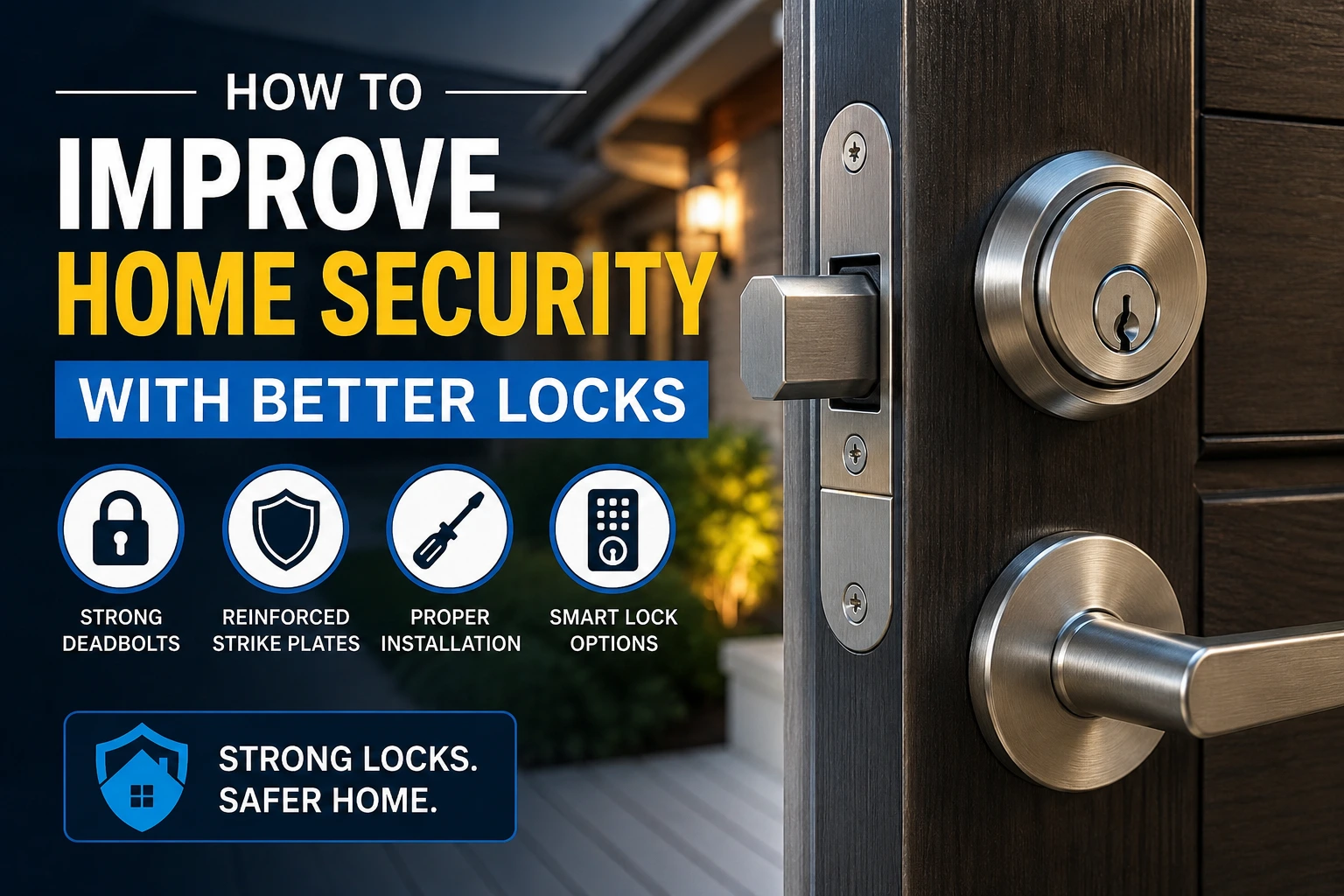
A new lock does not automatically make a door harder to get through. If the existing lock is worn, poorly fitted, or weaker than the rest of the door assembly, the lock may not be the only part that needs attention. But sometimes the lock is not the main problem.
The door frame, strike area, and installation matter just as much. A strong deadbolt attached to a weak mounting point is still part of a weak entry setup.
The useful question is not simply which lock to buy. First, figure out where the current setup is weak. From there, you can decide whether replacing the lock, reinforcing the existing hardware, or doing both makes sense.
Start by Checking the Door and Lock You Already Have
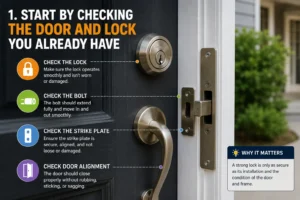
Start with the lock that is already on the door. Check what type it is, whether it operates smoothly, and whether anything feels loose or poorly fitted. A worn lock may need attention even if the door itself is in decent shape.
A knob lock is not the same thing as a deadbolt. They serve different purposes, and a deadbolt is generally the more relevant lock to examine when you are looking at the main security of an exterior entry door. The type of locking arrangement matters before you start comparing replacement products.
Then look past the lock itself. Check the area where the bolt enters the frame and where the strike plate is mounted. If the frame is damaged, loose, or poorly aligned, a stronger lock cannot make up for that weakness.
Look at the screws, strike plate, and bolt fitment as well. The bolt should extend properly into the strike without scraping, binding, or stopping short. You should not have to push or pull the door hard just to make the lock work.
Door alignment can reveal other problems. If the door sags, rubs against the frame, or no longer closes the way it used to, the issue may be with the door setup rather than the lock.
By the time you finish this check, you should have a clearer idea of whether the weak point is the lock, its installation, or the door assembly around it.
Know What Actually Makes a Lock More Secure
A lock’s security comes from how it is built and how well it resists the kinds of force it is designed to withstand. A higher price or a label such as “premium” does not tell you much by itself.
For a deadbolt, pay attention to the bolt, the housing, and how the lock is designed to mount to the door. The bolt needs to extend properly, and the lock needs to be installed securely. A well-made lock can still perform poorly if it is fitted incorrectly.
ANSI/BHMA grades give homeowners a more useful reference than marketing language alone. The standards distinguish different levels of performance for certain types of door hardware, so a recognized grade can help when comparing otherwise similar locks. The grade is useful information, but it should not be treated as a guarantee that the entire door is secure.
Be cautious with high-security claims, too. Look for specific construction details and recognized ratings rather than relying on the phrase “high security” on a product page. Two locks can use similar-sounding language while having different hardware and performance characteristics.
Price, appearance, and extra features can still matter for other reasons. They just should not be mistaken for proof that one lock will provide better physical security.
Choose the Right Lock Upgrade for Your Door
A better-rated deadbolt can be a sensible upgrade when the existing lock is worn, poorly made, or simply does not offer the level of hardware you need. The goal is not to replace a lock just because a newer model exists. If the current lock is in good condition and the surrounding door hardware is the weak point, spending more on the lock may not solve much.
Single-cylinder and double-cylinder deadbolts also come with different trade-offs. A single-cylinder model uses a key on the outside and a thumb turn inside. A double-cylinder model requires a key from both sides. That can affect how the door is used in an emergency, so the extra locking point is not automatically the better choice for every exterior door.
Smart locks change the access method more than they change the basic physical strength of the door. A keypad or electronic lock may be useful if you want keyless entry, but those features should be judged separately from the strength of the lock itself.
Compatibility matters before you buy. A rental may limit what you can change, while an existing door may have hardware or dimensions that make one replacement easier than another. If the current lock is sound but the mounting area is weak, reinforcing the existing setup may also make more sense than replacing the lock.
Strengthen the Lock’s Connection to the Door
The lock can be the strongest part of the setup and still have a weak connection to the door frame. The strike area is where that becomes obvious. If the strike plate is loose or poorly mounted, the lock’s strength does not tell the whole story about the door setup.
A security strike plate can provide a stronger mounting point, but the screws and the material they are going into matter too. Use screws that are appropriately sized for the installation rather than assuming longer is always better. The strike plate should also line up with the bolt so the deadbolt can extend fully without forcing the door.
This is one situation where reinforcement may be more useful than buying another lock. If the existing deadbolt is in good condition but the frame or strike area is the obvious weak point, fixing that connection addresses the actual problem.
Installation quality matters just as much when a new lock is being fitted. A straightforward replacement may be manageable as a DIY job, but a damaged frame, poor alignment, or more involved hardware can make professional installation the safer choice.
Smart and Extra Lock Features: What They Actually Add
Smart locks can make everyday access easier. Remote access, activity logs, temporary codes, and keyless entry can be useful when several people need to get through the same door or when you do not want to hand out physical keys.
Those features are mostly about access and convenience. They do not automatically make the physical lock stronger. A smart lock still depends on the door, frame, hardware, and installation around it.
Electronic access also creates a few practical things to account for. Batteries can run down, electronic components can fail, and a backup method of getting inside matters if the normal access method stops working.
Additional locks or locking points should be judged the same way. More hardware is not necessarily more security if it does not fit the existing door properly or is installed poorly.
Check the Upgrade After Installation
Installing the lock is not the end of the check. Test the deadbolt with the door closed and make sure the bolt extends fully without sticking, scraping, or needing extra force. A lock that works smoothly with the door open can still bind when the door is shut.
Check where the bolt meets the strike plate. The bolt should enter cleanly rather than catching against the edge of the opening. If the door has to be pushed, pulled, or lifted to make the lock work, the alignment needs attention.
Look for loose screws, movement around the hardware, or any new misalignment. These are small problems, but they can become more annoying with regular use. The upgrade should also be judged as part of the whole door setup, not just by whether the new hardware looks solid.
Regular inspection matters too, especially on an entry door that gets used several times a day. A lock can loosen or the door can shift over time.
Common Lock-Upgrading Mistakes
A common mistake is spending more on the lock while leaving a weak door frame or poorly mounted strike area untouched. The price of the lock does not fix a weakness somewhere else in the entry setup.
Another is treating smart features as a substitute for physical security. Remote access, codes, or activity records can be useful, but they do not automatically make the underlying lock or door stronger.
Security ratings can also be misunderstood when they are treated as a simple shortcut to a buying decision. The rating needs to be considered alongside the lock’s construction, installation, and the door it is being fitted to. Product claims alone do not settle the question.
Installation mistakes are easier to overlook than a bad lock. Incorrect screws, poor alignment, or hardware that is not seated properly can reduce the benefit of an otherwise suitable upgrade.
The same problem shows up when people choose a double-cylinder deadbolt or another specific setup without considering its trade-offs. What works well for one door may not make sense for another, particularly when the existing hardware, door condition, or installation constraints are different.
Frequently Asked Questions
Is a deadbolt more secure than a door knob lock?
Generally, a properly installed deadbolt provides a stronger locking arrangement than relying on a typical door knob lock alone. The exact level of security still depends on the door, frame, strike area, and installation.
Is a smart lock more secure than a traditional deadbolt?
Not automatically. A smart lock can add useful access features, but those features are separate from the physical strength of the lock and door.
Can I improve my door security without replacing the existing lock?
Yes. Depending on the condition of the existing setup, improving the strike area, mounting hardware, or installation may provide a useful improvement without replacing the lock itself.
How should homeowners understand ANSI/BHMA lock grades?
ANSI/BHMA grades provide a standardized way to evaluate certain aspects of lock performance. They are useful when comparing locks, but the grade should not be treated as the only factor that determines how secure an entire door setup is.
Is a double-cylinder deadbolt suitable for every exterior door?
No. It has practical trade-offs that need to be considered for the specific door and its use. The choice should not be based on the idea that one deadbolt arrangement is automatically best everywhere.
Do longer screws and a stronger strike plate really improve door security?
They can, particularly when the existing strike area or mounting is a weak point. The hardware still needs to fit the door and frame correctly and be installed properly.
Is an expensive lock always better for home security?
No. A higher price does not by itself mean the lock will provide a meaningful improvement. Construction, rating, installation, and the condition of the surrounding door setup matter too.
Key Takeaways
The first step is to find the actual weakness in the existing lock and door setup rather than assuming the lock itself is the problem.
A useful upgrade considers the lock, its installation, and the hardware connecting it to the door frame together. Smart features and premium wording should not be treated as automatic substitutes for physical security.
Better locks can reduce risk, but they are not a guarantee of complete protection.