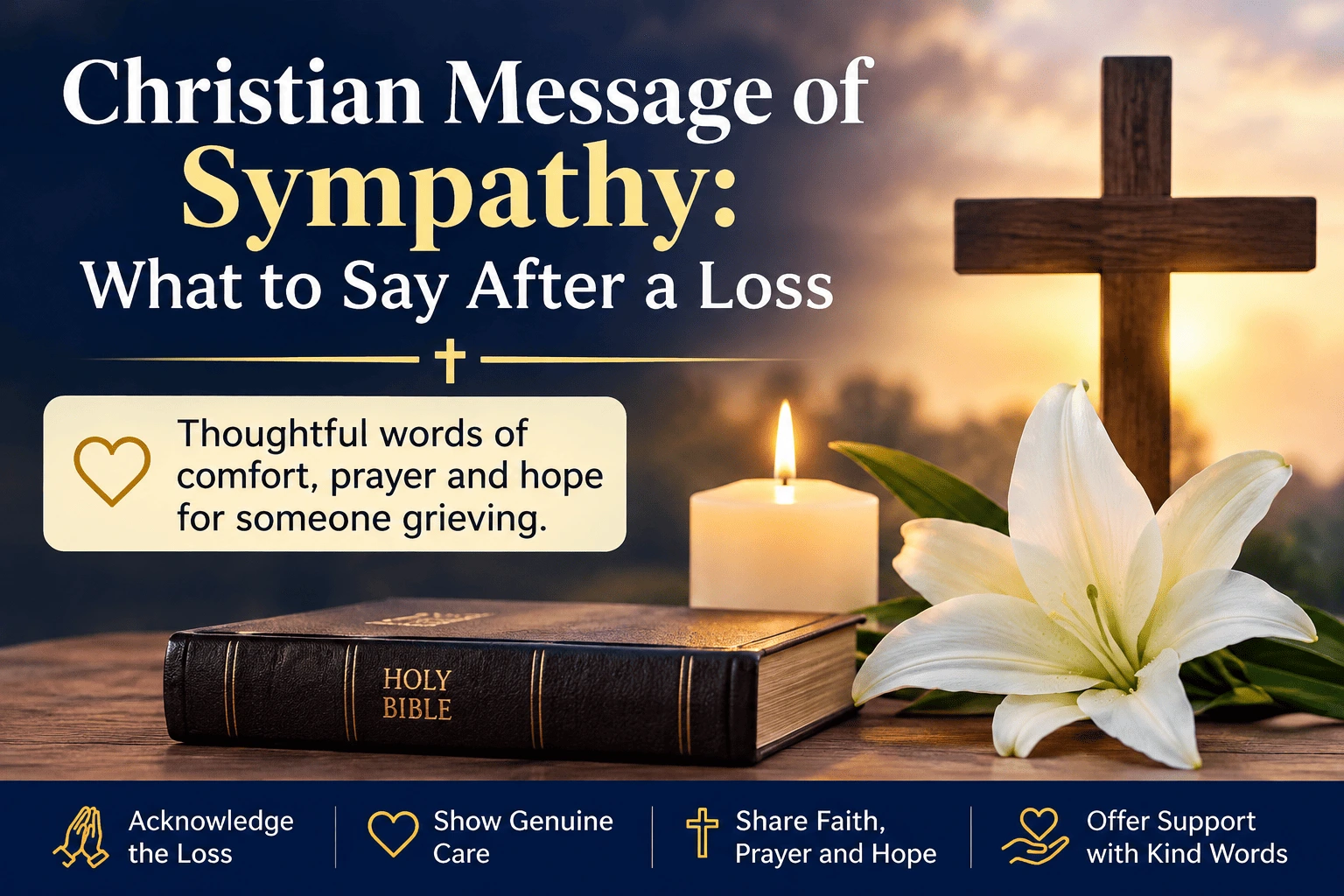
A Christian message of sympathy can offer comfort when you are unsure what to write after someone passes away, especially when you want your words to reflect Christian faith without making the moment feel heavier. A sympathy message does not need to explain the grief or try to make it disappear.
The focus here is simple: how to acknowledge the loss, show genuine care, and use faith, prayer, and hope in a way that feels natural. The right wording can depend on who died, your relationship with the person grieving, and how comfortable they are with religious language.
What Makes a Christian Sympathy Message Appropriate After a Loss?
A Christian sympathy message should first acknowledge the loss and the pain that comes with it. The message is there to show care, not to explain why the loss happened or tell someone how they should feel.
The Christian part can come through prayer, comfort, and hope rather than a long religious explanation. A simple expression of faith can feel more appropriate than filling the message with Bible verses or statements about what the grieving person should believe.
The relationship matters, too. A message to a close friend may sound more personal than one sent to a coworker or someone you know less closely. The recipient’s faith and emotional state also matter, so the message may need to be more faith-centred for one person and more restrained for another.
How to Bring Faith and Hope Into the Message
Prayer can be a simple way to express care without trying to explain the loss. Saying that you are praying for the person, or that you are keeping them in your prayers, can offer Christian comfort without asking them to feel better before they are ready.
Christian hope can also be expressed through beliefs about God’s presence, resurrection, eternal life, or heaven. These ideas can be meaningful in a sympathy message, but the wording needs care. A statement about eternal hope should not sound like an explanation of why the person died.
Faith-based reassurance becomes less helpful when it takes over the message. The person who died and the loss their family is facing should still remain at the centre.
What Should You Avoid Saying After Someone Dies?

Some familiar phrases can sound comforting to the person writing them but land differently with someone who is grieving. “Everything happens for a reason” can make a painful loss sound easier to understand than it really is.
The same problem can come from turning a sympathy message into a religious explanation. A long string of Bible verses, preaching, or explanations about God’s plan can make the message feel more like a sermon than a personal expression christian message of sympathy.
Telling someone to move on, stay positive, or focus on the good can also put pressure on them to respond to their grief in a certain way. They may not need reassurance that things will be okay. They may simply need their loss to be recognised.
It is also easy to make the message about your own experience. Even when the intention is to show understanding, your story can pull attention away from the person who is grieving.
Simple, sincere wording usually leaves more room for the actual loss than a collection of familiar clichés.
Frequently Asked Questions
Do I Need to Include a Bible Verse in a Christian Sympathy Message?
No. A Bible verse can be meaningful, especially when you know the person would find comfort in Scripture, but it is not required. A sincere message can express Christian care without quoting a verse.
Is “I’m Praying for You” Appropriate in a Sympathy Message?
Yes, when prayer fits the relationship and the recipient’s faith. It can be a simple way to offer support without trying to explain the loss.
Can I Send a Christian Condolence Message to Someone Who Is Not Religious?
You can, but the wording should respect the person’s beliefs. If you know they are not comfortable with religious language, a strongly faith-centred message may not feel personal or supportive.
What Should I Avoid Saying After a Sudden Death?
Avoid trying to explain the death, assign a reason to it, or pressure the grieving person to find something positive in what happened. Sudden loss can leave people with very little emotional room for explanations.
Is a Christian Sympathy Message Appropriate for the Loss of a Pet?
Yes, if the pet was deeply meaningful to the person grieving. The message can acknowledge that relationship without treating their grief as less important because the loss was a pet.
Should a Sympathy Message Be a Short Text or a Detailed Message?
Either can be appropriate. The relationship and situation matter more than the length. A short text can be enough when it feels genuine, while a closer relationship may call for something more personal.
What to Keep in Mind
The goal is not to find perfect words. A sincere expression of care can matter more than carefully polished condolence language.
Christian faith can offer comfort and hope, but it should not be used to explain away the person’s pain. The message still needs to leave room for the loss itself.
The relationship, situation, and person receiving the message should shape how personal or faith-centred the wording becomes. Simple words often carry more weight than an elaborate message.