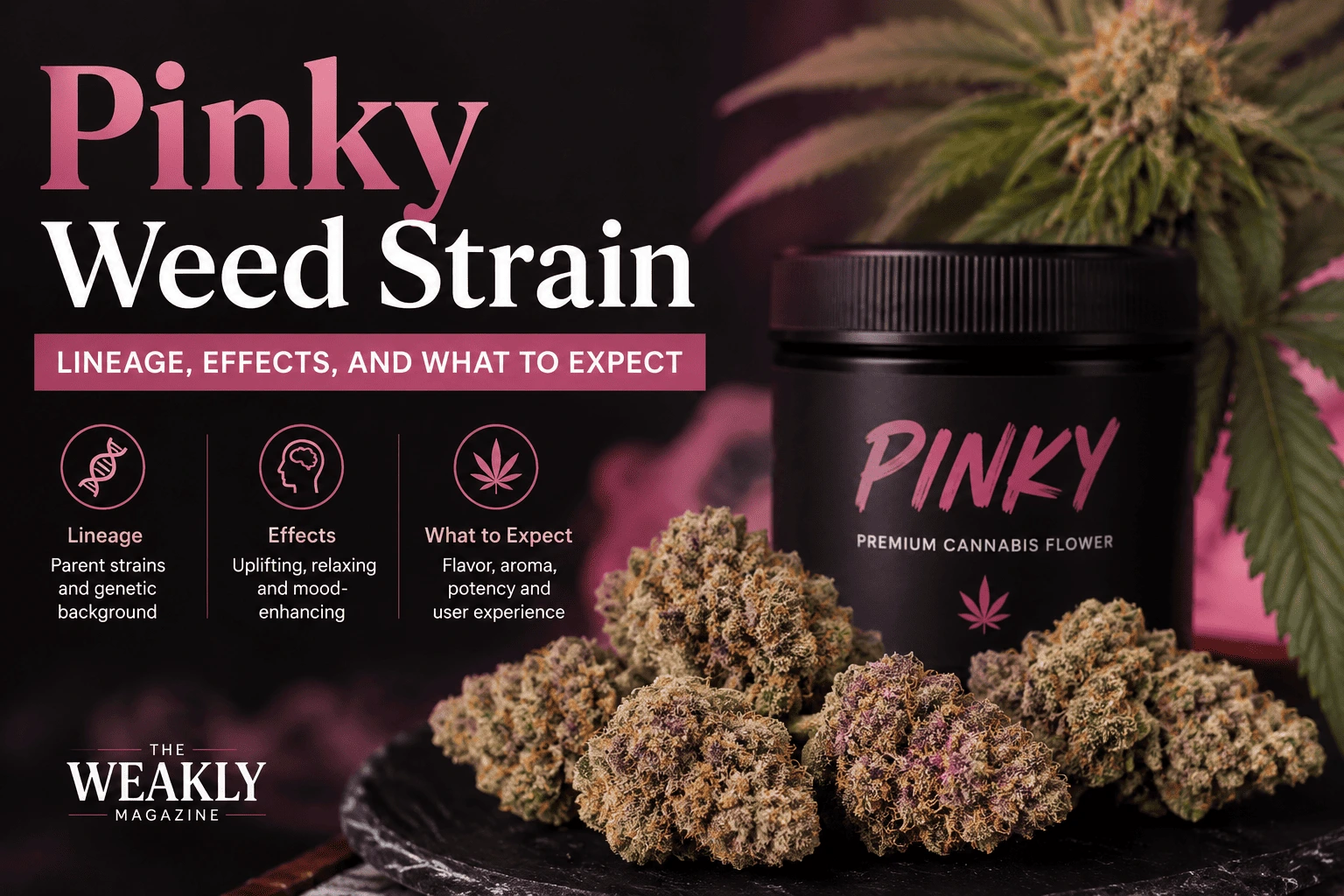
Introduction
The Pinky weed strain is a name that does not always point to one perfectly consistent strain profile. Different listings can attach different details to the name, so a description found online may not tell the whole story.
That makes strain identity worth separating from reported characteristics. Lineage, appearance, aroma, flavor, cannabinoids, and terpenes can all be described differently depending on the source or the specific product.
The same caution applies to effects and potency. Reported experiences can help set expectations, but they are not guarantees. Individual response can shift with dose, tolerance, product composition, and other factors.
Medical claims and promotional language also need to stay separate from basic strain information. The useful question here is what can actually be supported about Pinky, rather than what a description promises.
What Is the Pinky Weed Strain?
Pinky weed strain is generally described as a named cannabis strain, but the available descriptions do not always agree on its exact identity. Some sources may use the name alongside different background details, which makes it important to check the specific product or source rather than treating every Pinky listing as interchangeable.
The name itself can also create confusion when it appears alongside a similar or differently named strain. A matching name does not automatically prove matching genetics. If a breeder, origin, or background is clearly documented, that information is more useful than an unsupported profile copied across listings.
Pinky is listed as sativa in the strain record reviewed here. Those labels give a broad category, but they do not reliably predict how the strain will feel for a particular person.
Pinky Strain Lineage and Genetic Background
The lineage of a strain called Pinky is not well documented across sources. One strain database lists Pinky under “Unknown or Legendary” and gives its family tree simply as unknown sativa crossed with unknown sativa, without naming specific parent strains. It also does not identify a confirmed breeder.
That leaves little room for a confident parent-by-parent account. The reported sativa classification is not enough to predict a particular effect or growing characteristic.
The bigger issue is that similar names can belong to separate genetics. Pinky Sour, for instance, is a different strain with breeder-stated lineage of Pink Runtz crossed with KG Sour D Bx2. Treating that lineage as Pinky’s would mix two different strain records.
A named strain can also contain different phenotypes. Even when the genetics are established, individual plants can show differences in structure, aroma, color, or resin production. With Pinky, where the underlying lineage itself is thinly documented, that distinction matters even more.
What Does Pinky Look, Smell, and Taste Like?
Descriptions of Pinky’s appearance and sensory profile are limited. The SeedFinder record currently reports no user data for its smell, taste, or gallery, so there is not enough solid evidence to assign a detailed aroma or flavor profile to the strain itself.
That means broad claims about dense buds, strong trichome coverage, pink coloration, or a particular flavor should be treated carefully unless they are tied to a specific documented cut or product.
For a particular batch, appearance can shift with phenotype and growing conditions. Aroma and flavor can move too, especially after differences in harvest timing, curing, and storage. A description attached to one Pinky sample does not automatically describe every flower sold under the same name.
Cannabinoids and Terpenes in Pinky
The cannabinoid data for Pinky is unusually thin. SeedFinder does not have usable test results for the strain, showing zero recorded averages for THC, THCA, CBD, CBG, THCV, CBC, and CBN.
A separate database lists one Pinky laboratory scan that reports 26.79% THC, 0% CBD, and 1.82% total terpenes. Limonene and linalool were each detected at 0.03% in that scan.
That 26.79% figure is useful for understanding the tested sample, but it should not be treated as a fixed THC level for every Pinky product. One lab result describes one batch. THCA figures, when shown on a product label, also need to be read in the context of the product’s reported total THC rather than treated as a separate measure of how strong every sample will be.
The terpene information has a similar limitation. Limonene and linalool can contribute to the aromatic character of a sample, but their presence does not establish a particular effect on its own. Terpenes are one part of the chemical profile, while the final experience involves more than a terpene label.
What Effects Can You Expect From Pinky?
There is not enough reliable user or strain-specific reporting to give Pinky a firm effects profile. The main strain record does not provide documented effect data, so claims that Pinky consistently produces focus, energy, relaxation, euphoria, or sedation would go beyond what the available record supports.
Stinky Pinky is a separate strain, so its reported effects should not be used to establish Pinky’s effects profile.
For a specific Pinky product, the experience can also change with the product form, cannabinoid concentration, amount consumed, tolerance, mood, and personal sensitivity. Someone with little experience may respond quite differently from a regular cannabis consumer, especially when the product carries a relatively high THC result.
Onset can vary as well. The way an effect develops depends partly on how the product is used, so a strain name alone is not enough to predict either timing or intensity.
Potency, Side Effects, and What to Keep in Mind
The available Pinky testing describes individual samples rather than establishing one fixed THC level for the strain. The laboratory sample discussed earlier reached 26.79% THC, which would generally be considered a relatively high-THC flower result, but that number belongs to the tested sample rather than every product carrying the Pinky name. Potency can also look very different across flower, concentrates, and infused products because they are not comparable forms of cannabis.
Higher-THC cannabis can make unwanted effects more noticeable. Dry mouth, dizziness, drowsiness, anxiety, and impaired coordination are among the effects that can occur with cannabis use. How strongly they appear depends partly on the product and the person using it, so a high test result should not be treated as a promise of a particular experience.
Overconsumption is another practical concern, especially with products whose effects take longer to become noticeable. Edibles and other infused products can take longer to produce effects and can make consuming too much easier.
Impairment matters beyond how the experience feels. Cannabis can slow reaction time and decision-making, affect coordination, and distort perception, all of which can interfere with driving or other activities that require attention.
Pregnancy is a separate safety concern, and cannabis use during pregnancy or breastfeeding should be discussed with a healthcare professional. The same applies when someone takes prescription medications or has an existing health concern, since cannabis can interact with medications and individual risks are not something a strain description can settle.
How Much Can You Trust Pinky Strain Descriptions?
Pinky strain descriptions are best treated as starting information, not as a complete record of what is in a particular product. Online profiles can differ in the breeder details, genetics, THC figures, and reported effects they attach to a name, and the Pinky records reviewed here already show how limited some of that information can be.
A product-specific laboratory report carries more weight for cannabinoid content than a generic strain page. The same applies to the label on the actual product being considered. A strain description can tell you how something is commonly presented; a current lab result tells you more about that particular batch.
Variation does not necessarily mean that one description is deliberately wrong. Phenotype, harvest timing, curing, and storage can all affect the final characteristics of cannabis. Even within a recognized genetic line, the finished flower is not guaranteed to match a single written profile in every detail.
Marketing language is another thing to separate from measurable information. Claims about being exceptionally strong, intensely relaxing, or otherwise distinctive are descriptions, while cannabinoid percentages and terpene results can be tied to testing when reliable laboratory data is available.
For Pinky, checking the exact product label and its current lab results is therefore more useful than relying on a strain name alone. That becomes especially important when different listings give different numbers or describe the same name in noticeably different ways.
Frequently Asked Questions
Is Pinky weed strain indica, sativa, or hybrid?
Pinky is listed as sativa in the strain record reviewed here, but the available information is too limited to treat that classification as a complete description of the strain.
What are Pinky strain’s reported parent genetics?
No specific parent strains can be reliably confirmed from the main Pinky record. Its listed lineage remains unknown rather than identifying named parents.
What are the commonly reported effects of Pinky weed strain?
There is not enough reliable strain-specific reporting to establish a consistent effects profile. Reports attached to similarly named strains should not automatically be treated as Pinky effects.
How potent is Pinky strain?
A laboratory-tested Pinky sample was reported at 26.79% THC, but that result applies to the tested sample. It should not be treated as a fixed potency for every product sold under the Pinky name.
Does Pinky affect everyone the same way?
No. Cannabis effects can vary between people based on factors such as tolerance, dose, personal sensitivity, and the product itself.
How is Pinky strain’s aroma and flavor described?
The main Pinky record does not provide enough reliable aroma or flavor data to support a specific sensory profile. Descriptions tied to other strains with similar names should be kept separate.
What is the best way to verify Pinky’s actual potency?
The most useful source is the current laboratory testing and product label for the specific batch. A general strain profile is less precise for determining the cannabinoid content of a particular product.
What to Keep in Mind
Pinky is easier to understand when the strain name is treated as a starting point rather than proof of a fixed profile. Verified genetics, product testing, and the actual cannabinoid information provide stronger evidence..
Reported effects are useful for setting expectations, but they are not guaranteed results
Different products and phenotypes can vary, so a description attached to one sample may not carry over perfectly to another. Reading strain claims alongside the available evidence, the specific product information, and individual factors gives a more realistic picture of what Pinky may be like.