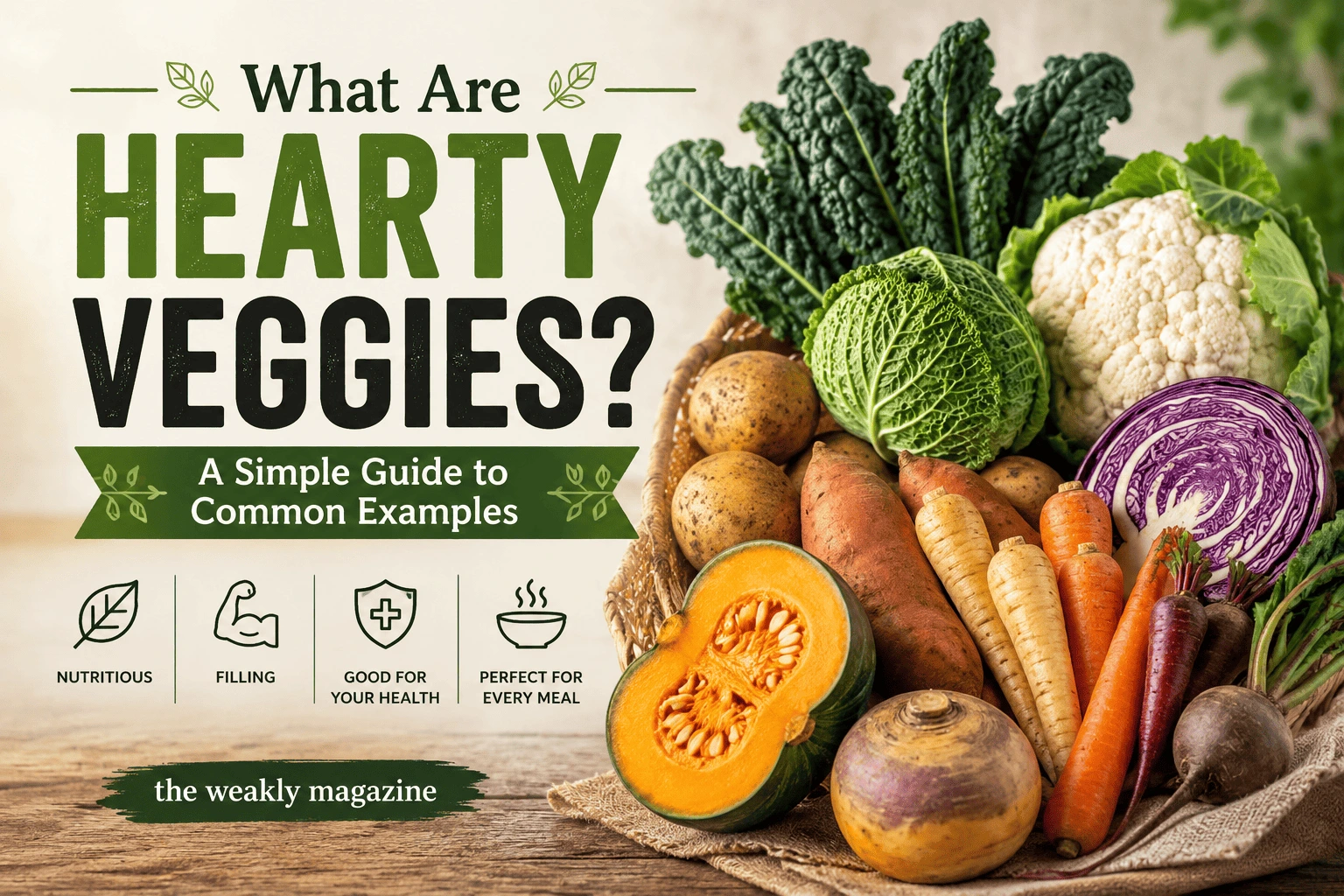
“Hearty veggies” sounds like it should describe a specific group of vegetables, but it doesn’t. Hearty vegetables’ is generally used as a cooking description rather than a botanical category. The phrase is usually used in cooking to describe vegetables that feel substantial, hold their texture, or make a meal seem more filling.
That can include vegetables with very different shapes and flavors. Some are dense and starchy, while others stay firm when cooked or simply have enough substance to stand out in a dish. The label depends more on how a vegetable feels and functions in a meal than on its scientific classification.
The word “hearty” also does not automatically mean healthier, higher in calories, or more nutritious. It describes the quality of the food, not a nutrition ranking.
What Does “Hearty Veggies” Actually Mean?
“Hearty veggies” is a practical cooking term. It usually points to vegetables with a dense or sturdy texture, a substantial bite, or enough presence to make a dish feel more substantial. The exact line is not fixed. A vegetable can feel hearty in one dish and less so in another.
Texture is often the easiest clue. Vegetables that stay firm, have a dense interior, or take well to longer cooking are often described this way. The term can also refer to the role a vegetable plays. If it gives a soup, roast, stew, or main dish some real body, calling it hearty makes sense.
That is different from calling a vegetable healthy. “Healthy” is a broad nutrition judgment, while “hearty” is mostly about texture, substance, and eating experience. A hearty vegetable does not need to be high in calories, and it does not have to be especially nutritious compared with every other vegetable.
The term is also flexible because cooking changes texture. A firm vegetable can become soft after simmering, while roasting can brown its edges and change its texture. So “hearty” is better understood as a useful description than as a strict category.
Common Hearty Veggies to Know
Sweet potatoes are an easy example because their dense, starchy flesh gives them a substantial bite. They can hold up as a major part of a meal rather than feeling like a small side added for color or variety.
Cabbage gets there in a different way. Its leaves are sturdy, and they keep enough texture through cooking to give a dish some structure. It does not need to be dense or starchy to feel substantial.
Broccoli and cauliflower also fit the idea, especially when they are roasted, grilled, or cooked until their edges develop some color. Their firm structure gives them more presence than vegetables that soften almost immediately.
Winter squash, including butternut and acorn squash, shows why the term cannot be reduced to firmness. They become soft when cooked, but their flesh is still substantial enough to anchor a dish.
Brussels sprouts and root vegetables such as carrots, parsnips, and beets can work in much the same way.Their texture and the way they hold up in a meal can make them useful examples.
The list is not a strict checklist. Whether a vegetable feels hearty can depend on how it is cooked and what else is on the plate.
How Hearty Veggies Compare With Lighter Vegetables
The difference becomes easier to notice when you put these vegetables beside more delicate ones. Leafy greens, cucumber, and summer squash tend to have a lighter bite and may play a different role in a meal. They can be crisp, tender, or quick to soften rather than dense or sturdy.
That does not make them less healthy. “Lighter” here is about the eating experience and the vegetable’s texture, not its nutritional value.
A hearty vegetable may make a dish feel more substantial, while a lighter vegetable can bring freshness or a softer contrast. Neither role is automatically better. The choice usually comes down to what the meal needs and what texture you want when you sit down to eat.
Putting both kinds in the same meal can make the difference more noticeable. A sturdy roasted vegetable alongside something crisp or tender gives the plate more texture without requiring every vegetable to serve the same purpose.
How to Cook Hearty Veggies Without Losing What Makes Them Useful
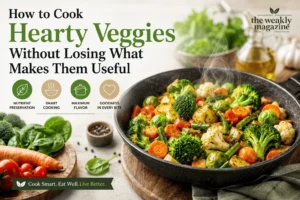
Roasting works especially well when you want a dense vegetable to develop browned edges and deeper flavor. The heat changes the outside without requiring the whole vegetable to become soft, so texture still matters when you eat it.
Steaming and sautéing give you more control when preserving that texture is the point. They can keep vegetables from becoming overly soft, although the result depends on the vegetable and how long it stays on the heat.
Soups, stews, and braises take the idea in another direction. Vegetables that can withstand longer cooking can add substance to a dish while taking on some of the surrounding liquid and flavor.
Grilling and other high-heat methods can also work well for sturdy vegetables. The outside may char or brown while the inside keeps some bite. Overcooking is where that advantage can disappear, leaving a vegetable soft and mushy instead.
Using Hearty Veggies in Everyday Meals
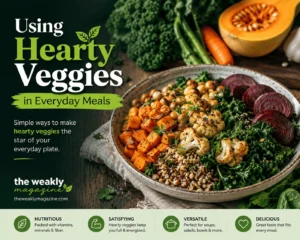
Hearty vegetables do not have to sit at the edge of the plate as a side dish. They can take up a meaningful part of the meal, particularly in grain bowls, soups, stews, roasted vegetable plates, and pasta dishes.
What goes around them matters. Protein and grains can make a meal more substantial, while sauces and lighter vegetables can keep it from feeling too heavy or one-note. Different textures usually make the plate more interesting than using vegetables with the same consistency throughout.
Seasonal availability can narrow the choice in a useful way. Personal taste matters too, especially when the vegetable needs to carry a larger share of the meal rather than simply accompany it.
Common Misunderstandings About Hearty Veggies
A hearty vegetable does not have to be a root vegetable. The examples already show that sturdy leaves, firm florets, and substantial squash can fit the description too. The useful part of the term is how the vegetable behaves in a meal, not which plant group it belongs to.
“Hearty” is also not a nutrition ranking. A vegetable can feel substantial without being especially high in calories, and a vegetable that does not feel filling can still be nutritious.
The same goes for starch and carbohydrates. Some hearty vegetables are starchy, but starch is not a requirement. Dense texture and calorie content are separate things, so one should not be used as a shortcut for the other..
Choosing a Hearty Veggie for a Meal
The best choice depends partly on what you want the vegetable to do. A meal built around roasted, caramelized flavors calls for a different texture than a quick dish where the vegetables need to cook fast.
For soups and stews, cooking time matters. Vegetables that can handle longer cooking without falling apart are easier to work with, while faster meals may call for options that soften sooner.
Flavor matters once texture is covered. Sweet, earthy, bitter, and more neutral vegetables can each work differently with the other ingredients in the dish. Freshness, what is in season, and what you already have at home can narrow the choice without making it complicated.
Frequently Asked Questions
Is “hearty veggies” an official category?
No. “Hearty veggies” is a cooking term rather than a formal botanical category. It describes how a vegetable feels and functions in a dish.
Can leafy greens be hearty veggies?
They can be, depending on how they are used and the texture they bring to the dish. The label is not limited to one type of vegetable.
Are hearty veggies always starchy?
No. Starch can contribute to a substantial texture, but it is not required for a vegetable to be considered hearty.
Do hearty vegetables need a specific cooking method to be healthy?
No. There is no particular cooking method that makes a vegetable healthy simply because it is hearty. Cooking mainly changes its texture, flavor, and how it works in the dish.
Are hearty veggies automatically different in weight or calorie content?
No. The word “hearty” does not tell you how many calories a vegetable contains or how much it weighs.
Which hearty vegetables work well in soups and stews?
Vegetables that hold up during longer cooking are generally useful in these dishes. Their texture can add substance without disappearing completely into the liquid.
Can frozen hearty vegetables be used in meals?
Yes. Frozen vegetables can work well when their texture suits the dish and they are handled according to the needs of the recipe.
What to Keep in Mind
One way to think about hearty veggies is to look at texture, substance, and the role the vegetable plays in a meal. Sweet potatoes, cabbage, broccoli, cauliflower, winter squash, and Brussels sprouts show how varied the category can be.
“Hearty” describes a cooking and eating experience, not a health label. The useful choice is the vegetable that fits the meal’s flavor, texture, and cooking method.