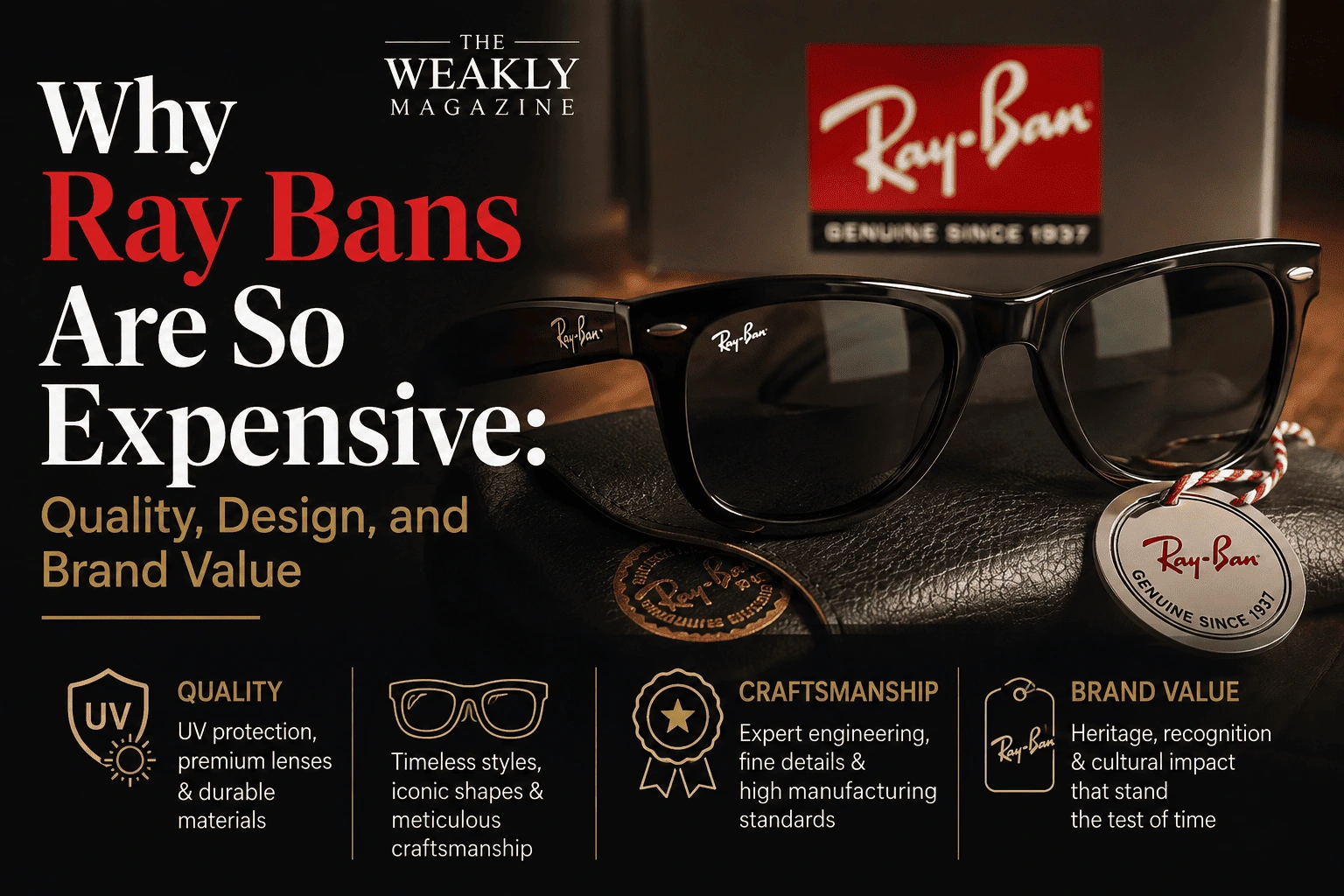
why ray bans are so expensive? Ray Bans sunglasses cost more than plenty of perfectly usable alternatives, so the obvious question is what you are actually paying for. The answer is not just the frame or the lenses. Design work, construction, manufacturing, distribution, and the value attached to the Ray-Ban name all sit somewhere in the price.
A higher price also does not automatically mean a better product in every respect. A cheaper pair can still provide solid sun protection and work well for everyday use. What changes from model to model is the mix of materials, features, design, and brand value behind the price.
What Are You Actually Paying For With Ray-Ban?
Part of the retail price pays for the physical sunglasses: the frame, lenses, hardware, finishing, and the work required to put everything together. But the price also carries costs that are less visible when you are holding the finished pair. Design development, manufacturing, distribution, and brand positioning all have to be accounted for.
That is where Ray-Ban sunglasses become a little harder to judge by price alone. A recognizable frame and a well-known name have value to some buyers even when those things do not improve the basic function of blocking sunlight. That value is real as a consumer preference, but it is different from measurable product quality.
Ray-Ban is owned by EssilorLuxottica, the eyewear group behind its production and distribution structure. That matters when looking at the price because the company operates across design, manufacturing, and retail rather than simply selling a frame made by an unrelated supplier.
Prices also vary considerably between Ray-Ban models. One pair may use a different frame material, lens setup, finish, or construction from another, so treating every Ray-Ban as though it offers the same value misses an important part of the picture.
The useful distinction is simple: price tells you what the market charges, not exactly how much better the sunglasses are. Some of what you pay is tied to physical features. Some are tied to design and brand recognition.
Lens and Sun Protection

Lenses are one of the easier parts of a Ray-Ban to judge because some of their features have a clear practical purpose. UV protection matters more than the tint or the look of the lens. A dark lens is not, by itself, evidence of better protection.
Polarization is a separate feature. Polarized lenses can cut reflected glare, which can make a noticeable difference around roads, water, snow, or other bright surfaces. Non-polarized lenses can still provide UV protection; they simply handle glare differently.
Lens technology and tint should not be treated as the same thing. Tint changes how light looks and feels to the wearer, while protection depends on what the lens is designed and rated to block. The details can also vary by model, so the specifications for the particular pair matter more than assumptions based on the Ray-Ban name.
Why Ray-Ban Design Adds to the Price
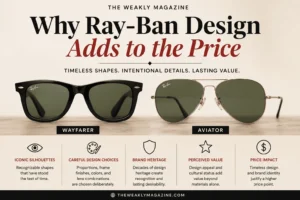
A large part of Ray-Ban’s appeal comes from shapes people can recognize without seeing the logo. The Wayfarer and Aviator are obvious examples, but the broader design language matters too. Proportions, frame finishes, colors, and lens combinations are deliberate choices rather than incidental details.
A familiar silhouette can feel distinctive even when its basic job is the same as that of a less expensive pair. Keeping a classic shape desirable for decades also gives the brand room to charge for design appeal, not just for the materials sitting in the frame.
Design work can affect the cost of a product, but perceived design value is harder to measure. A buyer may care a lot about the exact shape or finish while another buyer sees little reason to pay extra for it. That difference is about taste and product identity, not proof that the more expensive frame performs better in every respect.
How Brand History and Recognition Affect the Price
Ray-Ban’s name carries more weight than a logo printed on a frame. The brand has been tied to sunglasses culture for decades, and certain models became recognizable enough that people often identify the shape before they notice the label. That history gives buyers a sense of familiarity that a new or unknown brand does not automatically have.
Recognition can also create an expectation of consistency. A buyer who already knows Ray-Ban may feel more comfortable paying for a design and brand they have seen repeatedly, even when the functional differences from a cheaper pair are modest.
Marketing has helped build that recognition. Celebrity visibility, advertising, and repeated appearances in popular culture can make a product feel established and desirable. Those things can influence perceived value, but they do not explain the entire price by themselves.
This is the less tangible part of what you are buying. The Ray-Ban name can add value because people recognize it, want a particular look, or simply prefer the identity attached to the product. That preference is real, but it should not be confused with a measurable improvement in lens protection or frame performance.
Does Where Ray-Bans Are Made Affect Their Price?
The country printed on a pair of sunglasses can attract more attention than it deserves. Ray-Ban products have been manufactured in different locations, and the place of assembly alone does not tell you whether a particular model is well made.
Two products made in different countries can still be held to comparable manufacturing requirements.
That is why “Made in Italy” should not be treated as a shortcut for “better than everything else.” Italy has a strong reputation for eyewear manufacturing, but a country label cannot tell you everything about the construction of one specific pair. The model’s materials and build still deserve a closer look.
Are Ray-Bans Actually Better Than Cheaper Sunglasses?
Not necessarily in every way. A cheaper pair can provide good UV protection and handle ordinary daily use without much trouble. The price gap becomes more interesting when you look beyond basic function.
Ray-Ban can offer advantages in areas such as frame design, finishing, comfort, lens choices, durability, and styling. Whether those differences are large enough to justify the price depends on the particular model and what you care about. A well-made cheaper pair can still be the smarter buy if its features and construction meet your needs.
The logo also complicates the comparison. Part of the price can reflect the appeal of owning a recognizable design rather than a measurable jump in performance. Comparing two pairs at similar feature levels tells you more than comparing their price tags alone.
For one buyer, a particular frame, fit, or finish may make the premium worthwhile. For another, the practical difference may be too small to matter.
When Ray-Bans May Not Be Worth the Extra Cost
If basic sun protection is the main goal, paying more for a recognizable name may not add much. Cheaper sunglasses can offer adequate construction and similar levels of lens protection, depending on the pair.
The premium can also make less sense for someone who does not care about the brand’s styling or recognition. In that situation, part of what makes Ray-Ban appealing simply has little value to that buyer.
There is another practical issue: expensive sunglasses are still easy to damage. Scratched lenses, bent frames, poor storage, or careless handling can eat into the benefit of paying more, especially if the pair gets treated like something disposable.
The better question is whether the particular Ray-Ban fits your budget and gives you features you actually want. For some buyers, the answer to “Are Ray Bans worth it” will be yes. For others, a cheaper pair can do the job without giving up much that matters.
How to Judge the Value of a Ray-Ban Before Buying
A Ray-Ban can look like an easy buy when you already like the frame. The better test is more specific: check what is actually included in the particular model you are considering. Look at the frame material, lens type, stated protection features, and how the frame is constructed.
Fit matters just as much. A pair that looks good but sits poorly on the nose, presses at the temples, or feels awkward after a while is not a strong value for that buyer. Comfort is part of how useful the sunglasses will be once they leave the display case.
It also helps to compare the same basic features with sunglasses in the same price range. The point is not to compare logos. It is to see whether the extra money is buying something tangible in the frame, lenses, construction, or fit, or whether most of the appeal comes from the design and brand.
A large discount does not automatically make a pair a better value either. The original price and the size of the markdown say less than the actual specifications of the model.
Frequently Asked Questions
Is the high price of Ray-Bans mainly about quality or the brand name?
It is a combination. The physical product has its own materials, lenses, construction, and finishing, while the Ray-Ban name also carries design recognition and brand value. The balance can differ from one model to another.
Is every Ray-Ban model equally high quality?
No. Ray-Ban has different models, materials, lens options, and constructions. A brand-wide reputation does not make every pair identical in what it offers.
Are expensive Ray-Bans more durable than cheaper sunglasses?
Not automatically. Construction and materials matter, but a higher price by itself is not proof that a pair will last longer. How the sunglasses are used and stored matters too.
Do Ray-Ban lenses provide better protection than basic sunglasses?
The brand name alone is not enough to answer that. Protection should be judged from the specifications of the particular lens and model rather than from the price or logo.
Does the country where Ray-Bans are made determine their quality?
No. The country of manufacture does not, by itself, determine the quality of a pair. Materials, assembly, quality control, and the construction of the specific model give a more useful basis for judging it.
Are Ray-Bans worth buying for everyday use?
They can be, especially when the buyer values the fit, design, lens options, construction, or brand recognition enough to justify the price. Someone who mainly wants basic sun protection may get what they need for less.
Does fashion value form part of the price of iconic Ray-Ban designs?
Yes. Recognizable designs have value beyond their basic function. Part of what a buyer pays for can be the shape, styling, and cultural recognition attached to that design.
What to Keep in Mind
It is difficult to view the price of Ray-Ban solely as a price tag for quality. Design, manufacturing, lenses, construction, and brand value all contribute to shaping the final cost, and the importance of each factor is not the same for every model.
It is more useful to look at physical quality and brand premium separately. When evaluating a specific pair, first consider its materials, lenses, fit, and construction, and then think about how much extra you feel is reasonable to pay for the design or brand recognition.
In the end, value depends on the buyer’s priorities. If performance and durability are the most important factors, they should come first. If iconic design or brand recognition is also a meaningful part of the purchase, its value can also be considered in the decision.